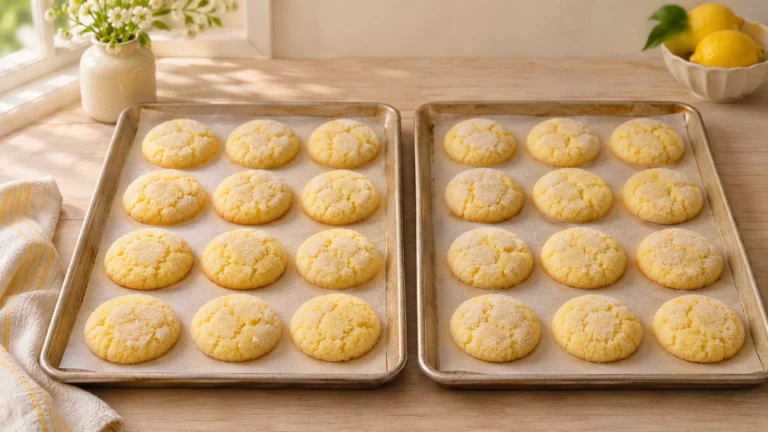
Hi, I’m Sophie Bennett. I’m happy you’re here to make buttery shortbread cookies with me. I love a dessert with a clear method and a little room for your own finishing touch. Today we’re aiming for a delicate sandy bite, clean vanilla flavor, and a buttery finish, with each stage laid out so you can work at a comfortable pace.
This recipe makes 24 cookies. Read through the directions first, set out the two large baking sheets, and plan for the resting time before you begin. That small bit of preparation makes it easier to enjoy the process and serve the dessert at its best.
Why This Recipe Is Awesome
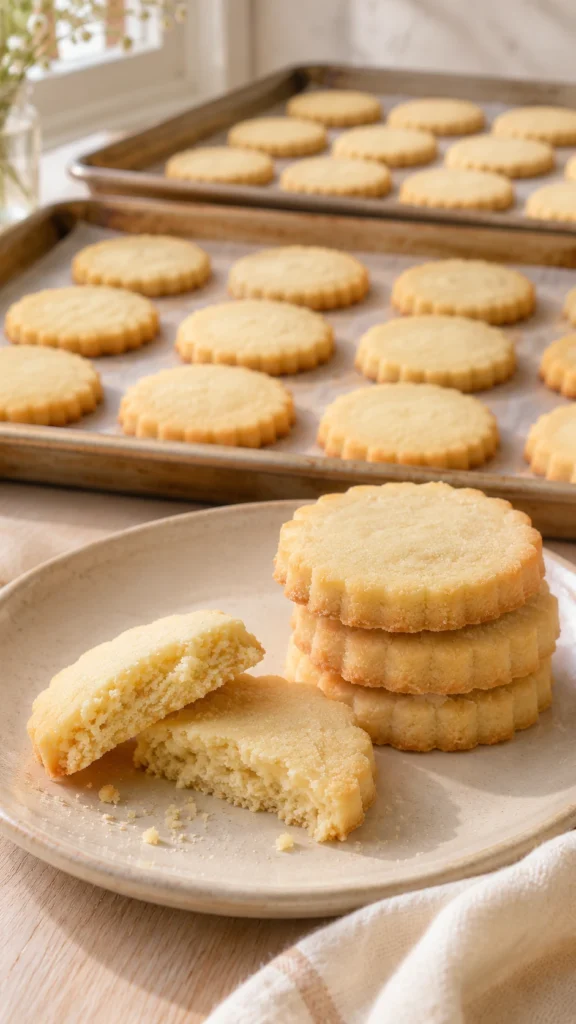
The appeal is a delicate sandy bite, clean vanilla flavor, and a buttery finish. Five basic ingredients create a cookie where butter remains the main flavor. Powdered sugar mixes smoothly into the dough, and a lower oven temperature encourages a pale, delicate finish. Slicing chilled logs avoids extra rolling flour and keeps the preparation simple.
Ingredients You’ll Need
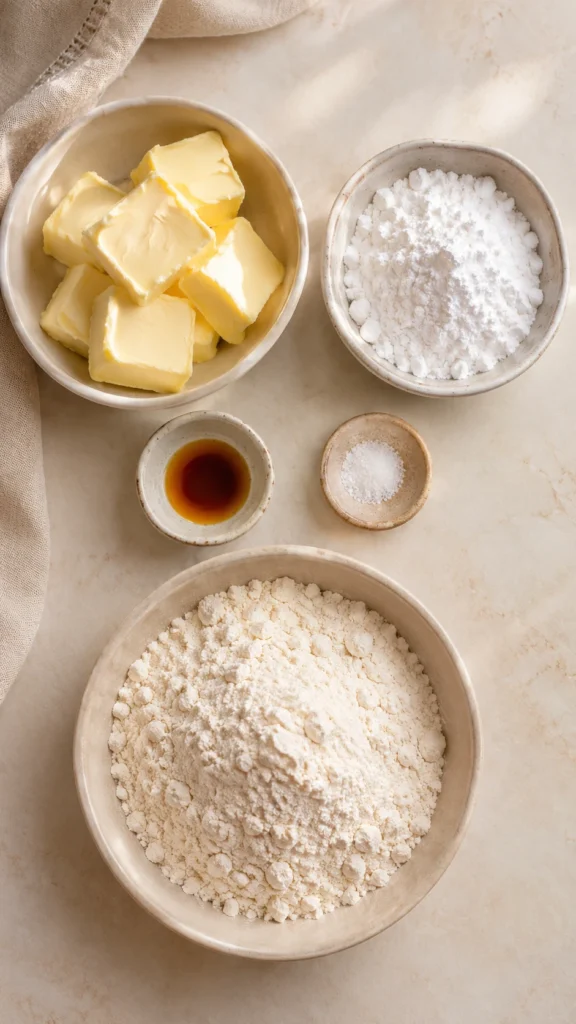
The recipe card gives the complete quantities for every component. These ingredient notes explain a few details that make the method easier to follow.
- Flour supplies structure; spoon and level it, or use the gram weight so the mixture does not become unnecessarily dry.
- Butter contributes flavor and texture. Use it cold, softened, or melted exactly where specified; those states perform different jobs.
- Sugar controls sweetness and also affects tenderness. Keep the measured amount rather than making a large reduction on the first attempt.
- Vanilla rounds out the flavor. Measure rather than pouring freely, especially when the batch is small.
Tools & Accessories for This Recipe
Choose equipment that suits the recipe size and your workspace. These basic tools help with measuring, mixing, and handling the finished dessert.
Affiliate links: qualifying purchases through these links may earn a commission.
- Two large baking sheets — the specified size and shape for this batch. Find on Amazon
- Digital Kitchen Scale — measuring flour accurately so the dough stays balanced. Find on Amazon
- Cookie Scoop — dividing the dough into portions that bake at a similar rate. Find on Amazon
- Parchment Paper — lining cool baking sheets for easier release. Find on Amazon
- Thin Cookie Spatula — moving delicate cookies after their first cooling period. Find on Amazon
- Wire Cooling Rack — cooling each batch fully before stacking or storing. Find on Amazon
Step-by-Step Instructions
- Beat softened butter and powdered sugar for about 2 minutes until smooth and creamy. Avoid whipping excessive air into the mixture.
- Mix in vanilla and salt. Add flour in two additions on low speed, stopping when the dough forms soft clumps.
- Press the clumps together by hand without kneading. Shape into two logs about 1 1/2 inches wide, then wrap firmly.
- Refrigerate for 1 hour, until firm enough to slice. Heat the oven to 325°F (165°C) and line two baking sheets.
- Cut logs into 24 rounds, about 1/2 inch thick. Rotate each log between cuts to help keep the slices round.
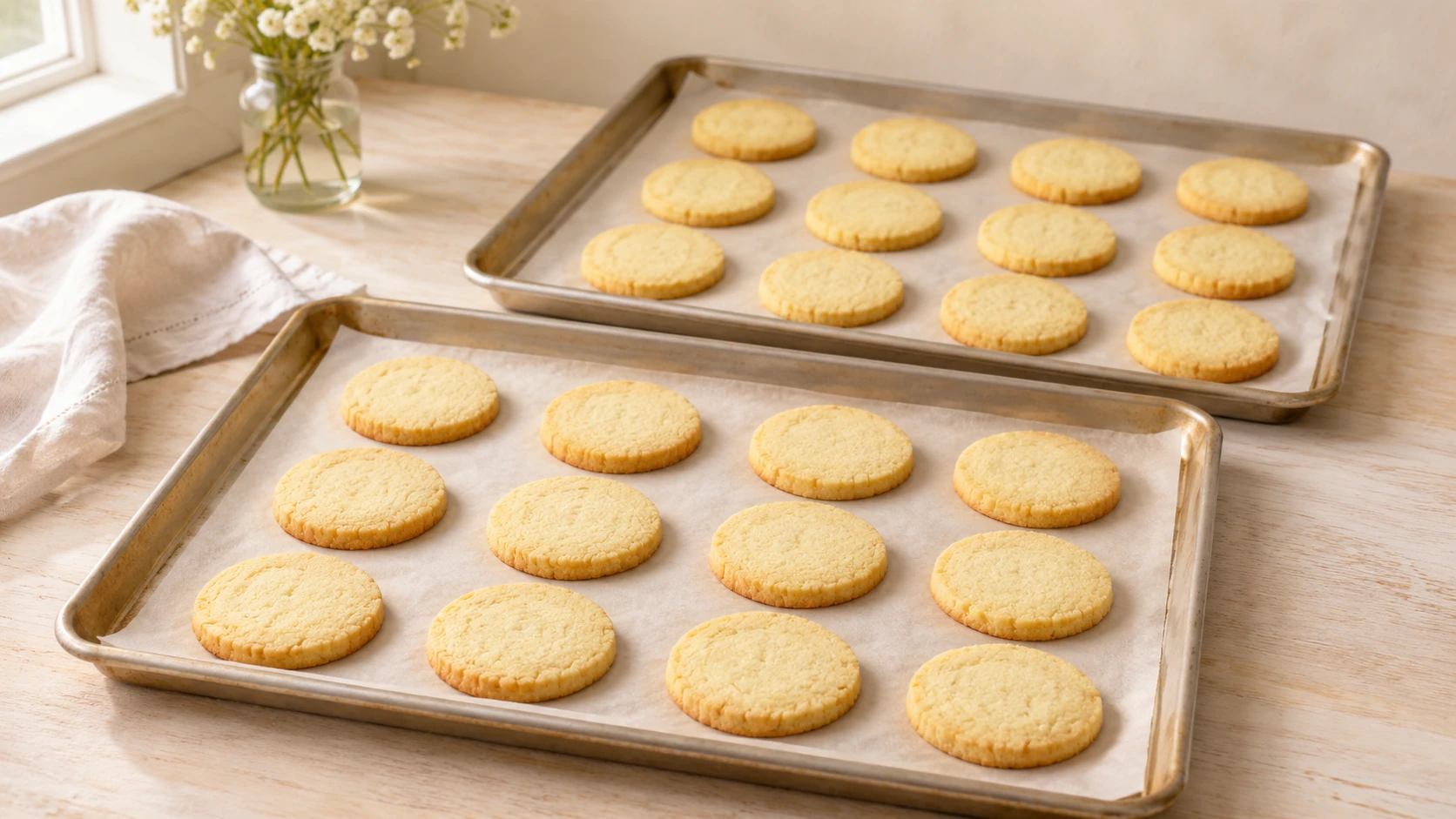
- Arrange slices 1 inch apart and bake for 16–20 minutes. Look for dry surfaces and pale golden edges rather than dark browning.
- Leave on the sheet for 10 minutes because fresh shortbread is fragile. Transfer carefully to a rack to cool completely.
- Serve once cool and crisp. Store in a tightly closed container after all warmth has escaped, separating layers with parchment if desired.
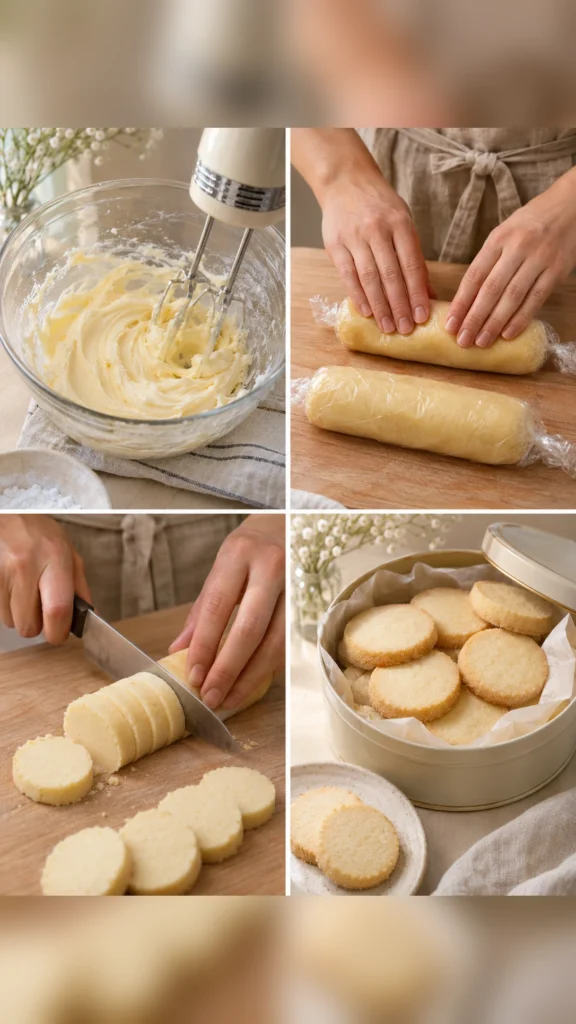
Bake one sheet at a time for the most consistent result in a home oven. The listed total baking estimate allows for batches; the shorter time in the method applies to an individual sheet.
Common Mistakes to Avoid
- Measure flour carefully and press a crumbly dough together with your hands before deciding it needs more moisture.
- Uneven portions finish at different times. Divide the dough consistently and bake similarly sized cookies together.
- Using a hot baking sheet can cause spreading before the dough sets. Cool the sheet between batches and keep waiting dough chilled when directed.
- Packing warm cookies away traps steam. Cool them completely on a rack before closing the container.
Position the sheet near the center of the oven and leave space around it. If your oven has a strong hot spot, rotate the sheet near the end rather than repeatedly opening the door.
Alternatives & Substitutions
Rub 1 teaspoon orange zest into the powdered sugar before mixing for a lightly fragrant variation.
Keep the main structure of the recipe intact when making this variation. Replacing flour, fat, eggs, or dairy can require a different formula rather than a direct swap.
Storage and Serving
Store airtight at cool room temperature for up to 1 week. Freeze baked shortbread or wrapped dough logs for up to 2 months.
Ingredient check: this recipe includes wheat, milk. Review packaged ingredients for additional allergens and use clean equipment when preparing food for guests.
FAQ
Can I make this ahead?
Store airtight at cool room temperature for up to 1 week. Prepare any fresh garnish close to serving so it keeps its color and texture.
Which pan or container should I use?
Use the two large baking sheets as written. The depth controls how the mixture sets, so changing the dimensions means you also need to reassess the timing.
What is the most important texture tip?
Measure flour carefully and press a crumbly dough together with your hands before deciding it needs more moisture.
Can I change the flavor?
Rub 1 teaspoon orange zest into the powdered sugar before mixing for a lightly fragrant variation. Make one small change at a time so it is easier to judge the result.
How do I know it is ready to serve?
Let the cookies stand on the sheet as directed, then move them to a rack. Their centers firm as they cool; lifting them straight from the oven can break them.
Can I halve or double the recipe?
For a first batch, use the quantities and pan listed. Scaling changes thickness, mixing, and timing; multiplying ingredients alone does not establish a new baking time.
Why does the dough look crumbly at first?
The flour needs to become coated in butter. Press a handful together; if it holds, gather the dough gently instead of immediately adding liquid that would change the shortbread texture.
Buttery Shortbread Cookies
Ingredients
Equipment
Method
- Beat softened butter and powdered sugar for about 2 minutes until smooth and creamy. Avoid whipping excessive air into the mixture.
- Mix in vanilla and salt. Add flour in two additions on low speed, stopping when the dough forms soft clumps.
- Press the clumps together by hand without kneading. Shape into two logs about 1 1/2 inches wide, then wrap firmly.
- Refrigerate for 1 hour, until firm enough to slice. Heat the oven to 325°F (165°C) and line two baking sheets.
- Cut logs into 24 rounds, about 1/2 inch thick. Rotate each log between cuts to help keep the slices round.
- Arrange slices 1 inch apart and bake for 16–20 minutes. Look for dry surfaces and pale golden edges rather than dark browning.
- Leave on the sheet for 10 minutes because fresh shortbread is fragile. Transfer carefully to a rack to cool completely.
- Serve once cool and crisp. Store in a tightly closed container after all warmth has escaped, separating layers with parchment if desired.
Notes
- Yield: 24 cookies
- Oven/heat: 325°F (165°C)
- Pan/container: Two large baking sheets
- Approximate active oven time for the batch; follow the per-sheet timing in the instructions.
- Times are approximate: cook/bake 40 minutes (approximate); cooling/chilling/resting 1 hour 15 minutes (approximate; see method); total 2 hours 15 minutes (approximate).
- Measure flour carefully and press a crumbly dough together with your hands before deciding it needs more moisture.
- Rub 1 teaspoon orange zest into the powdered sugar before mixing for a lightly fragrant variation.
- Store airtight at cool room temperature for up to 1 week. Freeze baked shortbread or wrapped dough logs for up to 2 months.
- Nutrition values are not provided; no calculated nutrition data is included.
Final Thoughts
Buttery Shortbread Cookies is a lovely excuse to slow down and make something sweet. Give the recipe its measuring, mixing, and resting time, then enjoy a delicate sandy bite, clean vanilla flavor, and a buttery finish. Keep the recipe card handy for your next batch, and choose a simple finish that lets the dessert itself shine.