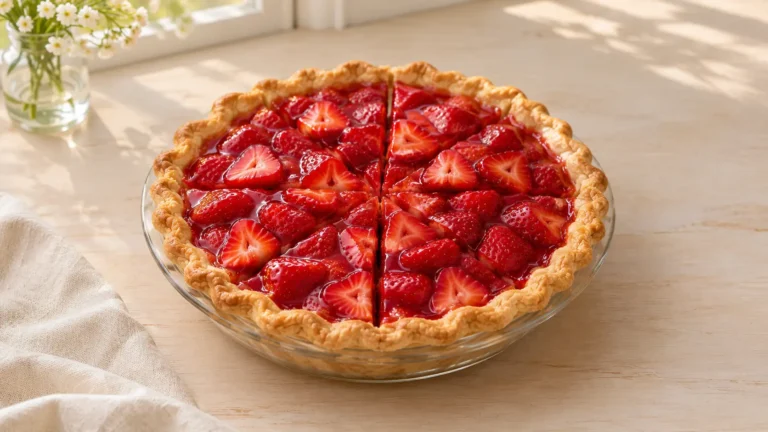
Hi, I’m Sophie Bennett. I’m happy you’re here to make mini lemon tarts with me. I love a dessert with a clear method and a little room for your own finishing touch. Today we’re aiming for crisp individual pastry cups filled with smooth tangy lemon curd, with each stage laid out so you can work at a comfortable pace.
This recipe makes 12 mini tarts. Read through the directions first, set out the 12-cup standard muffin pan, and plan for the resting time before you begin. That small bit of preparation makes it easier to enjoy the process and serve the dessert at its best.
Why This Recipe Is Awesome
The appeal is crisp individual pastry cups filled with smooth tangy lemon curd. Small pastry shells make the lemon curd the focus of each serving. Cooking the curd separately lets you strain it smooth and chill it before filling the crisp shells. Keeping both components apart until near serving helps the bases retain their delicate texture.
Ingredients You’ll Need
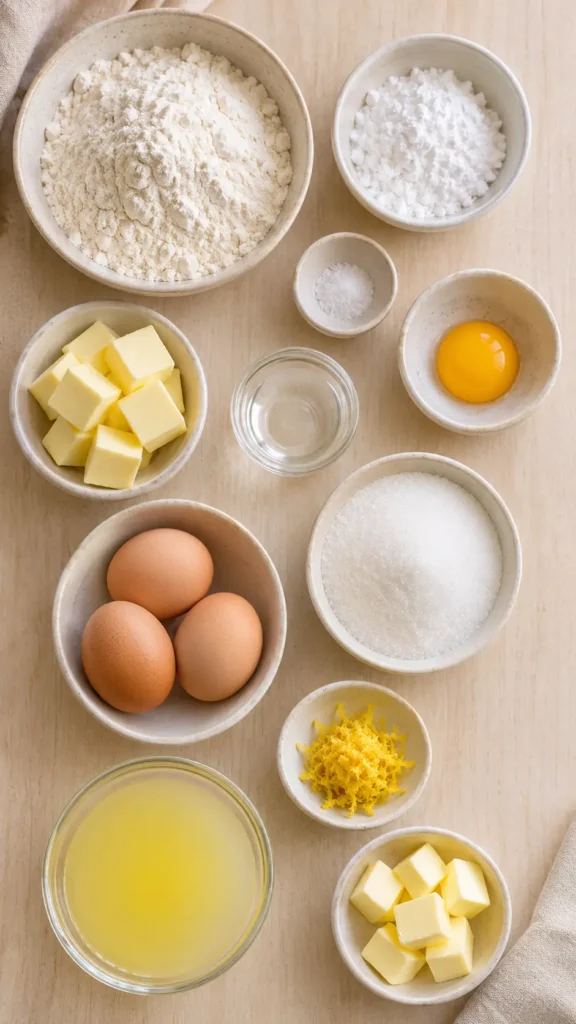
The recipe card gives the complete quantities for every component. These ingredient notes explain a few details that make the method easier to follow.
- Lemon juice brings acidity, while zest adds fragrance without much liquid. Keep the measured juice quantity consistent.
- Flour supplies structure; spoon and level it, or use the gram weight so the mixture does not become unnecessarily dry.
- Butter contributes flavor and texture. Use it cold, softened, or melted exactly where specified; those states perform different jobs.
- Sugar controls sweetness and also affects tenderness. Keep the measured amount rather than making a large reduction on the first attempt.
Tools & Accessories for This Recipe
Choose equipment that suits the recipe size and your workspace. These basic tools help with measuring, mixing, and handling the finished dessert.
Affiliate links: qualifying purchases through these links may earn a commission.
- 12-cup standard muffin pan — the specified size and shape for this batch. Find on Amazon
- Digital Kitchen Scale — measuring pastry flour without packing the cup. Find on Amazon
- Rolling Pin — rolling the dough evenly from the center outward. Find on Amazon
- Pastry Blender — cutting cold butter into flour without warming it excessively. Find on Amazon
- Silicone Spatula — stirring filling and scraping the bowl clean. Find on Amazon
- Wire Cooling Rack — supporting the pan while pastry and filling cool. Find on Amazon
Step-by-Step Instructions
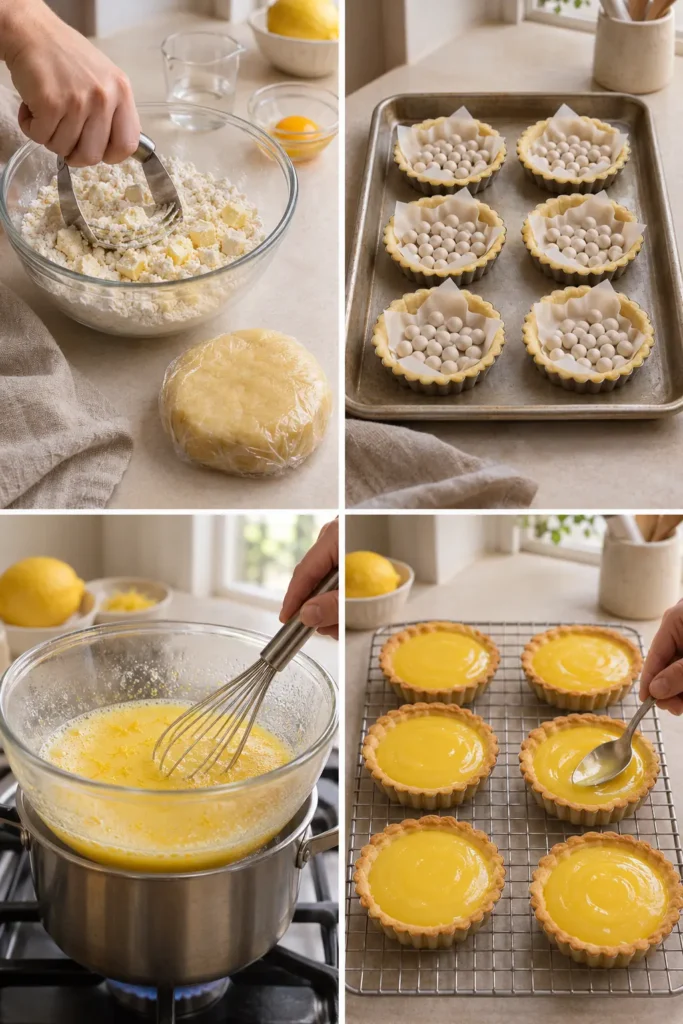
- Mix pastry flour, powdered sugar, and salt. Cut in cold butter, then add yolk and enough water to bring the dough together. Chill 30 minutes.
- Roll to about 1/8-inch thickness and cut twelve 4-inch circles, rerolling scraps gently. Fit into lightly greased muffin cups without stretching.
- Chill the shells 20 minutes while heating the oven to 350°F (175°C). Line each shell with a small parchment square and add pie weights.
- Bake 12 minutes, remove weights and paper carefully, and bake 8–10 minutes more until golden. Cool in the pan before lifting onto a rack.
- For curd, whisk eggs, sugar, lemon juice, and zest in a heatproof bowl. Set over barely simmering water without the bowl touching the water.
- Stir constantly until thick enough to coat a spoon and the curd reaches 170°F (77°C), about 8–12 minutes. Remove and whisk in cubed butter.
- Strain the curd, cover its surface, and refrigerate until cold, about 2 hours. Keep empty shells airtight once they are completely cool.
- Spoon chilled curd into cooled shells shortly before serving. Smooth the tops and refrigerate filled tarts until ready to arrange on a platter.
Work on a cool surface and pause to chill the dough if the butter starts smearing. A few minutes in the refrigerator is more useful than adding a heavy coating of extra flour to sticky pastry.
Common Mistakes to Avoid
- Fill the shells after both pastry and curd are cold; warm filling creates steam and softens the delicate bases.
- Stretching pastry into the pan encourages shrinkage. Lift and ease it into position, then patch cracks without pulling the dough tight.
- Adding too much bench flour can make pastry dry. Dust lightly, rotate the dough, and brush off excess before fitting it into the pan.
- Slicing too early can let warm filling escape. Use the cooling and chilling directions so each portion has time to hold together.
Alternatives & Substitutions
Use a tablespoon of lime juice in place of one tablespoon lemon juice for a subtle mixed-citrus filling.
Keep the main structure of the recipe intact when making this variation. Replacing flour, fat, eggs, or dairy can require a different formula rather than a direct swap.
Storage and Serving
Refrigerate filled tarts up to 2 days. Keep unfilled shells airtight for 2 days and refrigerate curd separately up to 4 days.
Ingredient check: this recipe includes wheat, milk, eggs. Review packaged ingredients for additional allergens and use clean equipment when preparing food for guests.
FAQ
Can I make this ahead?
Refrigerate filled tarts up to 2 days. Prepare any fresh garnish close to serving so it keeps its color and texture.
Which pan or container should I use?
Use the 12-cup standard muffin pan as written. The depth controls how the mixture sets, so changing the dimensions means you also need to reassess the timing.
What is the most important texture tip?
Fill the shells after both pastry and curd are cold; warm filling creates steam and softens the delicate bases.
Can I change the flavor?
Use a tablespoon of lime juice in place of one tablespoon lemon juice for a subtle mixed-citrus filling. Make one small change at a time so it is easier to judge the result.
How do I know it is ready to serve?
Follow both the baking cues and the cooling instructions. A browned crust alone cannot tell you whether a fruit filling has thickened or a custard has set.
Can I halve or double the recipe?
For a first batch, use the quantities and pan listed. Scaling changes thickness, mixing, and timing; multiplying ingredients alone does not establish a new baking time.
Can I fill the shells the night before?
You can, but the pastry will soften as it absorbs moisture. For the crispest result, store the cold curd and baked shells separately, then fill them closer to serving.
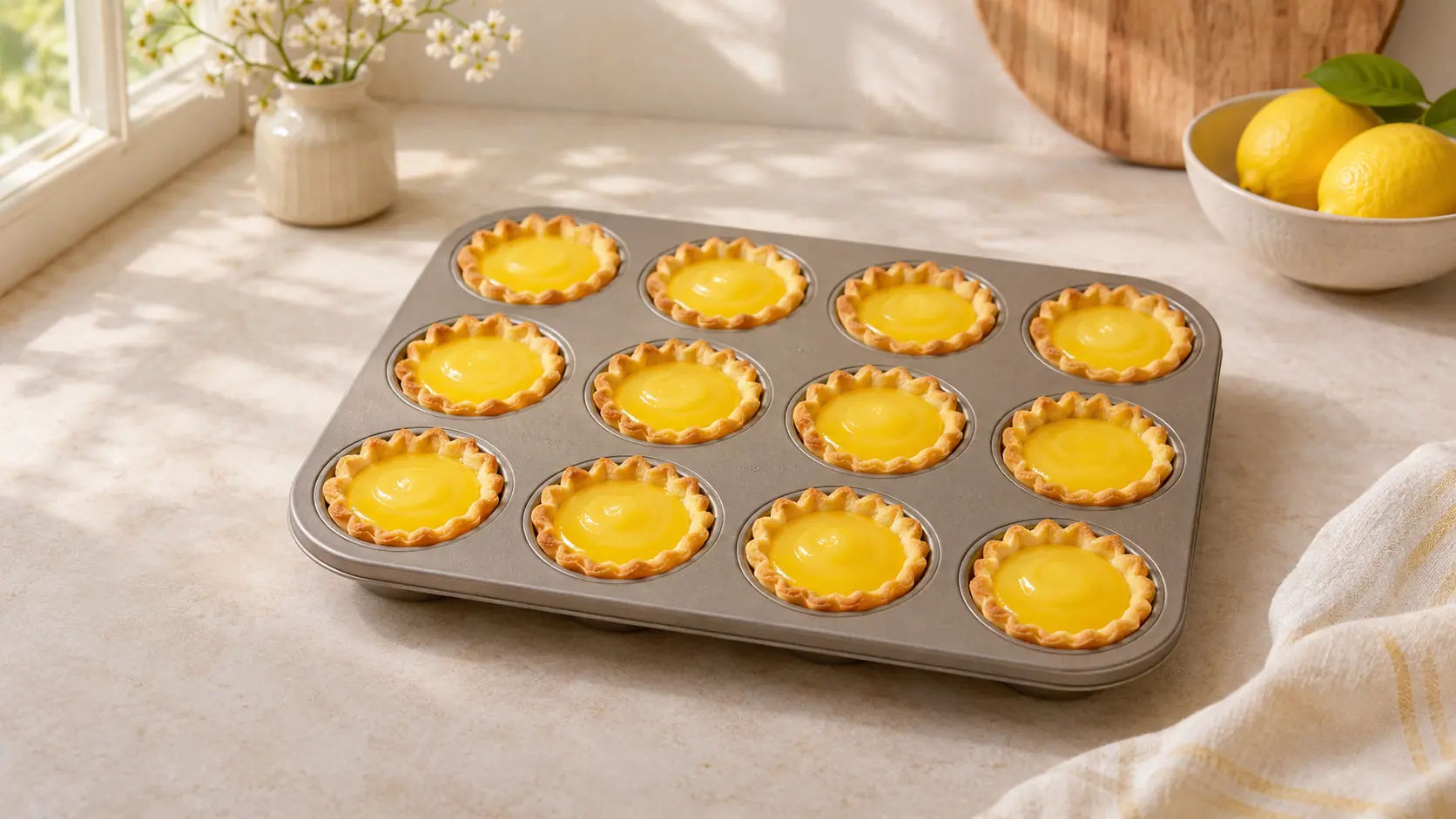
Mini Lemon Tarts
Ingredients
Equipment
Method
- Mix pastry flour, powdered sugar, and salt. Cut in cold butter, then add yolk and enough water to bring the dough together. Chill 30 minutes.
- Roll to about 1/8-inch thickness and cut twelve 4-inch circles, rerolling scraps gently. Fit into lightly greased muffin cups without stretching.
- Chill the shells 20 minutes while heating the oven to 350°F (175°C). Line each shell with a small parchment square and add pie weights.
- Bake 12 minutes, remove weights and paper carefully, and bake 8–10 minutes more until golden. Cool in the pan before lifting onto a rack.
- For curd, whisk eggs, sugar, lemon juice, and zest in a heatproof bowl. Set over barely simmering water without the bowl touching the water.
- Stir constantly until thick enough to coat a spoon and the curd reaches 170°F (77°C), about 8–12 minutes. Remove and whisk in cubed butter.
- Strain the curd, cover its surface, and refrigerate until cold, about 2 hours. Keep empty shells airtight once they are completely cool.
- Spoon chilled curd into cooled shells shortly before serving. Smooth the tops and refrigerate filled tarts until ready to arrange on a platter.
Notes
- Yield: 12 mini tarts
- Oven/heat: 350°F (175°C)
- Pan/container: 12-cup standard muffin pan
- Includes staged baking or stovetop work where applicable; use the texture cues in the method.
- Times are approximate: cook/bake 35 minutes (approximate); cooling/chilling/resting 2 hours 50 minutes (approximate; see method); total 4 hours 5 minutes (approximate).
- Fill the shells after both pastry and curd are cold; warm filling creates steam and softens the delicate bases.
- Use a tablespoon of lime juice in place of one tablespoon lemon juice for a subtle mixed-citrus filling.
- Refrigerate filled tarts up to 2 days. Keep unfilled shells airtight for 2 days and refrigerate curd separately up to 4 days.
- Nutrition values are not provided; no calculated nutrition data is included.

Final Thoughts
Mini Lemon Tarts is a lovely excuse to slow down and make something sweet. Give the recipe its measuring, mixing, and resting time, then enjoy crisp individual pastry cups filled with smooth tangy lemon curd. Keep the recipe card handy for your next batch, and choose a simple finish that lets the dessert itself shine.