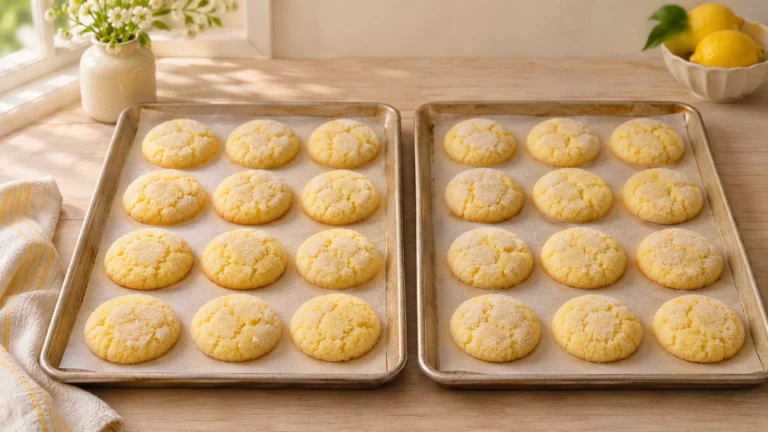
Hi, I’m Sophie Bennett. I’m happy you’re here to make snickerdoodle cookies with cinnamon sugar with me. I love a dessert with a clear method and a little room for your own finishing touch. Today we’re aiming for soft tangy centers, gently cracked tops, and a crisp cinnamon-sugar coating, with each stage laid out so you can work at a comfortable pace.
This recipe makes 24 cookies. Read through the directions first, set out the two large baking sheets, and plan for the resting time before you begin. That small bit of preparation makes it easier to enjoy the process and serve the dessert at its best.
Why This Recipe Is Awesome
The appeal is soft tangy centers, gently cracked tops, and a crisp cinnamon-sugar coating. Cream of tartar supplies the gentle tang associated with snickerdoodles, while the separate cinnamon sugar coats every portion. The cookies begin as even balls and settle into softly cracked rounds. Keeping the coating outside the dough creates a distinct fragrant finish.
Ingredients You’ll Need
The recipe card gives the complete quantities for every component. These ingredient notes explain a few details that make the method easier to follow.
- Flour supplies structure; spoon and level it, or use the gram weight so the mixture does not become unnecessarily dry.
- Butter contributes flavor and texture. Use it cold, softened, or melted exactly where specified; those states perform different jobs.
- Sugar controls sweetness and also affects tenderness. Keep the measured amount rather than making a large reduction on the first attempt.
- Heavy cream contributes richness and, when whipped, structure. Keep whipping cream cold and stop before it becomes grainy.

Tools & Accessories for This Recipe
Choose equipment that suits the recipe size and your workspace. These basic tools help with measuring, mixing, and handling the finished dessert.
Affiliate links: qualifying purchases through these links may earn a commission.
- Two large baking sheets — the specified size and shape for this batch. Find on Amazon
- Digital Kitchen Scale — measuring flour accurately so the dough stays balanced. Find on Amazon
- Cookie Scoop — dividing the dough into portions that bake at a similar rate. Find on Amazon
- Parchment Paper — lining cool baking sheets for easier release. Find on Amazon
- Thin Cookie Spatula — moving delicate cookies after their first cooling period. Find on Amazon
- Wire Cooling Rack — cooling each batch fully before stacking or storing. Find on Amazon
Step-by-Step Instructions
- Whisk flour, cream of tartar, baking soda, and salt. Line baking sheets and combine the coating sugar and cinnamon in a small bowl.
- Beat butter and dough sugar for 3 minutes until creamy. Beat in eggs individually, followed by vanilla, scraping the bowl as needed.
- Add the flour mixture on low speed and stop when combined. Cover and refrigerate the dough for 30 minutes.
- Heat the oven to 350°F (175°C). Divide dough into 24 even balls and roll each thoroughly in cinnamon sugar.
- Arrange 2 inches apart on cool baking sheets. Press very tall portions gently so they begin with a similar height.
- Bake 10–12 minutes, until the edges are set and the centers have gentle cracks but still look soft.
- Rest cookies on the baking sheet for 5 minutes, then transfer to a rack. Do not try to lift them while very hot.
- Cool fully before storing. Save any loose cinnamon sugar for another use only if it has not contacted raw dough or utensils.

Bake one sheet at a time for the most consistent result in a home oven. The listed total baking estimate allows for batches; the shorter time in the method applies to an individual sheet.
Common Mistakes to Avoid
- Keep the cream of tartar in this formula; it supplies the characteristic tang and reacts with the baking soda.
- Uneven portions finish at different times. Divide the dough consistently and bake similarly sized cookies together.
- Using a hot baking sheet can cause spreading before the dough sets. Cool the sheet between batches and keep waiting dough chilled when directed.
- Packing warm cookies away traps steam. Cool them completely on a rack before closing the container.
Position the sheet near the center of the oven and leave space around it. If your oven has a strong hot spot, rotate the sheet near the end rather than repeatedly opening the door.
Alternatives & Substitutions
Add 1/4 teaspoon ground cardamom to the coating for a warm aromatic accent.
Keep the main structure of the recipe intact when making this variation. Replacing flour, fat, eggs, or dairy can require a different formula rather than a direct swap.
Storage and Serving
Store airtight at room temperature up to 4 days. Freeze baked cookies for up to 2 months, thawing in their closed container.
Ingredient check: this recipe includes wheat, milk, eggs. Review packaged ingredients for additional allergens and use clean equipment when preparing food for guests.
FAQ
Can I make this ahead?
Store airtight at room temperature up to 4 days. Prepare any fresh garnish close to serving so it keeps its color and texture.
Which pan or container should I use?
Use the two large baking sheets as written. The depth controls how the mixture sets, so changing the dimensions means you also need to reassess the timing.
What is the most important texture tip?
Keep the cream of tartar in this formula; it supplies the characteristic tang and reacts with the baking soda.
Can I change the flavor?
Add 1/4 teaspoon ground cardamom to the coating for a warm aromatic accent. Make one small change at a time so it is easier to judge the result.
How do I know it is ready to serve?
Let the cookies stand on the sheet as directed, then move them to a rack. Their centers firm as they cool; lifting them straight from the oven can break them.
Can I halve or double the recipe?
For a first batch, use the quantities and pan listed. Scaling changes thickness, mixing, and timing; multiplying ingredients alone does not establish a new baking time.
Can I leave out the cream of tartar?
Keep it for this formula. It contributes acidity as well as flavor and works with the baking soda; removing it changes the dough rather than simply removing a seasoning.
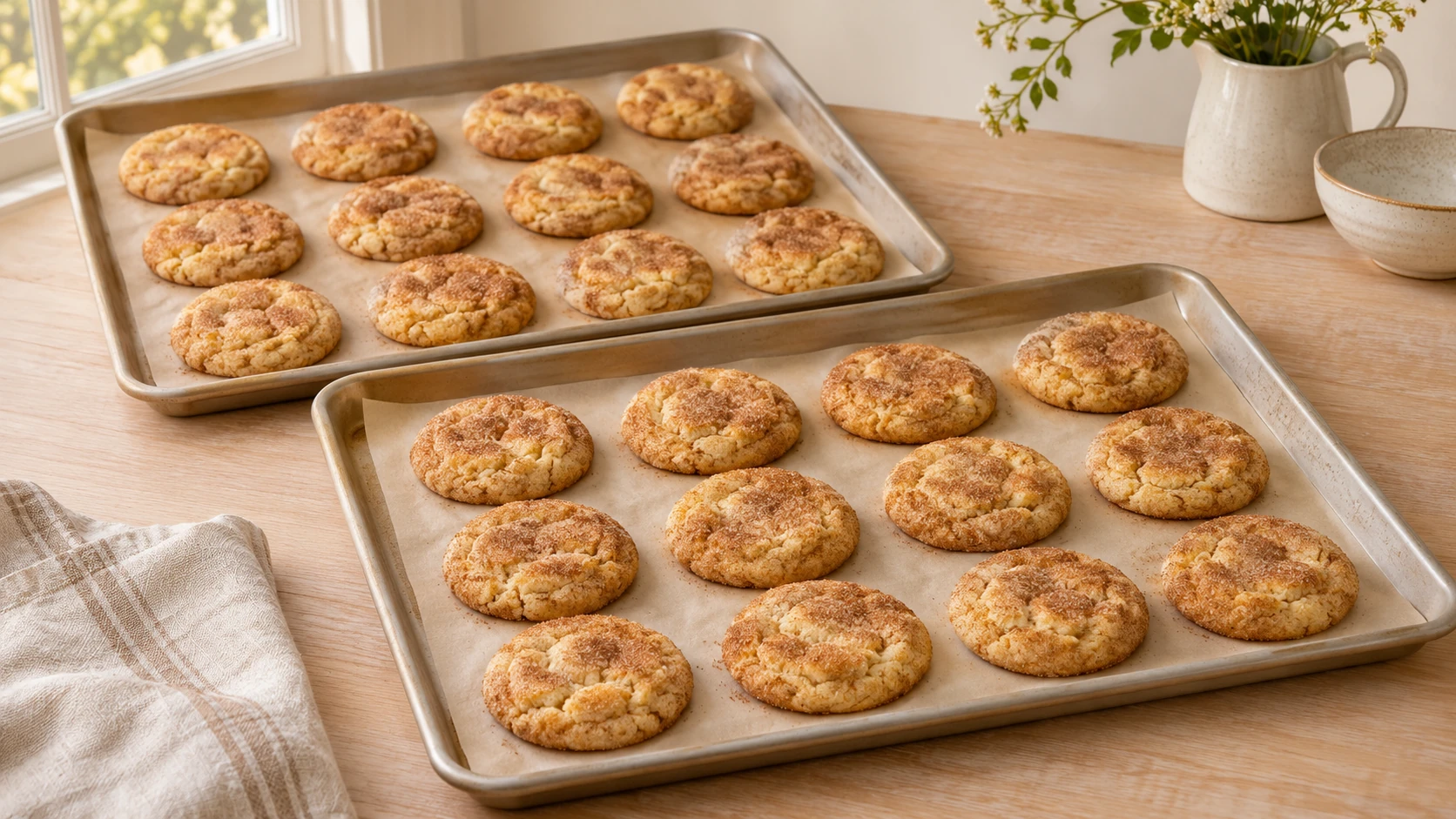
Snickerdoodle Cookies With Cinnamon Sugar
Ingredients
Equipment
Method
- Whisk flour, cream of tartar, baking soda, and salt. Line baking sheets and combine the coating sugar and cinnamon in a small bowl.
- Beat butter and dough sugar for 3 minutes until creamy. Beat in eggs individually, followed by vanilla, scraping the bowl as needed.
- Add the flour mixture on low speed and stop when combined. Cover and refrigerate the dough for 30 minutes.
- Heat the oven to 350°F (175°C). Divide dough into 24 even balls and roll each thoroughly in cinnamon sugar.
- Arrange 2 inches apart on cool baking sheets. Press very tall portions gently so they begin with a similar height.
- Bake 10–12 minutes, until the edges are set and the centers have gentle cracks but still look soft.
- Rest cookies on the baking sheet for 5 minutes, then transfer to a rack. Do not try to lift them while very hot.
- Cool fully before storing. Save any loose cinnamon sugar for another use only if it has not contacted raw dough or utensils.
Notes
- Yield: 24 cookies
- Oven/heat: 350°F (175°C)
- Pan/container: Two large baking sheets
- Approximate active oven time for the batch; follow the per-sheet timing in the instructions.
- Times are approximate: cook/bake 24 minutes (approximate); cooling/chilling/resting 45 minutes (approximate; see method); total 1 hour 29 minutes (approximate).
- Keep the cream of tartar in this formula; it supplies the characteristic tang and reacts with the baking soda.
- Add 1/4 teaspoon ground cardamom to the coating for a warm aromatic accent.
- Store airtight at room temperature up to 4 days. Freeze baked cookies for up to 2 months, thawing in their closed container.
- Nutrition values are not provided; no calculated nutrition data is included.
Final Thoughts
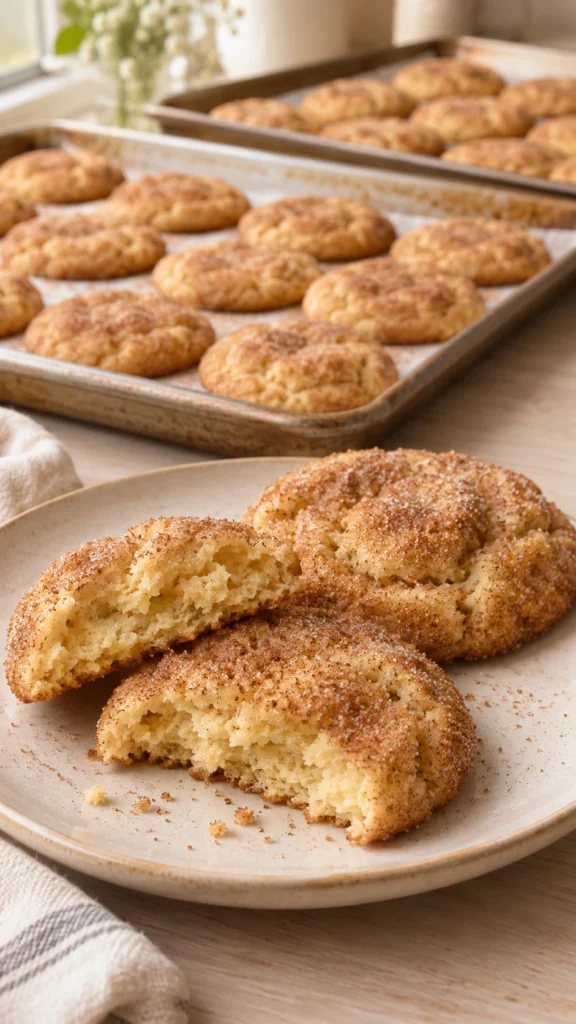
Snickerdoodle Cookies With Cinnamon Sugar is a lovely excuse to slow down and make something sweet. Give the recipe its measuring, mixing, and resting time, then enjoy soft tangy centers, gently cracked tops, and a crisp cinnamon-sugar coating. Keep the recipe card handy for your next batch, and choose a simple finish that lets the dessert itself shine.